Playway vs Traditional Learning: Which Nursery School Near PAU Road Ludhiana Is Right for Your Child?
Playway vs Traditional Learning: Which Nursery School Near PAU Road Ludhiana Is Right for Your Child?
Every parent wants to provide the best possible start for their child’s education. However, when it’s time to choose a nursery school, one common question often arises: Should I choose a playway school or a traditional classroom?
If you’re searching for a nursery school near PAU Road Ludhiana, understanding the difference between these two learning approaches can help you make a confident and informed decision. Early childhood education is about much more than learning letters and numbers. It is the stage where children develop communication skills, confidence, creativity, emotional intelligence, and a lifelong love for learning.
Today’s education experts widely recognize that young children learn most effectively when they are actively engaged. Rather than sitting through long lectures, they benefit from hands-on experiences, storytelling, music, movement, games, and interactive classroom activities. This is why many parents now prefer schools that combine structured learning with play-based experiences.
Understanding Playway Learning
Playway learning is an educational approach that encourages children to learn naturally through play, exploration, and interaction. Instead of memorizing information, children discover new concepts through activities designed around their developmental stage.
A playway classroom may include:
- Storytelling sessions
- Educational games
- Building blocks and puzzles
- Role-play activities
- Music and dance
- Art and craft
- Outdoor learning experiences
- Group interaction
These activities are carefully planned to help children build cognitive, social, emotional, and physical skills while enjoying the learning process.
What Is Traditional Learning?
Traditional learning usually focuses on teacher-led instruction, classroom discipline, textbooks, worksheets, and structured lessons. While this method has supported education for many years, very young children often require a more engaging approach that matches their natural curiosity and energy.
For nursery students, learning should be interactive rather than passive. When children participate actively, they are more likely to understand concepts, retain information, and develop positive attitudes toward school.
That is why many early childhood educators now recommend blending structured academics with activity-based learning instead of relying exclusively on conventional teaching methods.
Why Early Childhood Experts Recommend Play-Based Education
The first five years of life are among the most important stages of brain development. During this period, children learn rapidly through observation, movement, communication, and exploration.
Play-based education supports this natural development by encouraging children to:
- Ask questions
- Solve simple problems
- Build friendships
- Improve communication
- Develop creativity
- Learn teamwork
- Gain confidence
- Strengthen fine and gross motor skills
Instead of viewing play as a break from learning, modern educators recognize that play itself is one of the most effective learning tools during early childhood.
Learning Becomes More Meaningful
Imagine teaching colours through worksheets versus teaching colours by allowing children to paint, sort colourful objects, sing songs, and participate in matching games.
Which experience is likely to remain with the child longer?
Children remember experiences far better than memorized information. Activity-based learning creates meaningful connections that help students understand concepts naturally rather than simply repeating them.
For families exploring the best nursery school near PAU Road Ludhiana, this practical approach often provides children with a stronger educational foundation while making school a place they genuinely enjoy attending.
The Role of Teachers in a Playway Classroom
A common misconception is that playway learning lacks structure. In reality, effective play-based education requires careful planning by experienced teachers.
Educators observe children’s progress, guide classroom activities, encourage communication, and introduce new concepts through engaging experiences. Their role is to create opportunities for meaningful learning while supporting each child’s individual pace of development.
This balance between freedom and guidance helps children become confident learners who enjoy exploring new ideas.
How Playway Learning Prepares Children for Primary School
One of the biggest misconceptions about playway education is that children only “play” and do not develop academic skills. In reality, a well-designed play-based curriculum prepares children for primary school by building the essential foundations needed for future learning.
Through carefully planned activities, children begin developing:
- Early reading and phonics skills
- Number recognition and basic mathematics
- Listening and comprehension abilities
- Fine motor skills for writing
- Problem-solving and logical thinking
- Communication and vocabulary
- Social interaction and teamwork
Instead of introducing these concepts through pressure or rote memorization, children learn them naturally through meaningful experiences. This helps them transition into primary education with greater confidence and enthusiasm.
Playway Learning vs Traditional Learning: A Comparison
Parents often wonder which approach is more suitable for their child. While both have their place, understanding the differences can help families make a more informed choice.
| Playway Learning | Traditional Learning |
|---|---|
| Learning through activities and exploration | Learning mainly through classroom instruction |
| Encourages creativity and curiosity | Focuses on structured lessons |
| Child actively participates | Teacher primarily leads the lesson |
| Builds communication and confidence | Emphasizes academic discipline |
| Encourages collaboration | Often focuses on individual classroom work |
| Makes learning enjoyable | Can become repetitive for very young learners |
For nursery-aged children, many education experts recommend play-based learning because it aligns with how young children naturally discover and understand the world.
Common Myths About Playway Education
Myth 1: Children Only Play
Play activities are carefully planned with specific educational objectives. Every story, game, or classroom activity is designed to develop academic, social, emotional, or physical skills.
Myth 2: Academic Learning Starts Late
Children in playway programs begin learning letters, numbers, language, and foundational concepts from the very beginning—but in ways that are appropriate for their age and development.
Myth 3: There Is No Discipline
Playway classrooms follow routines, classroom expectations, and structured schedules. The difference is that discipline is encouraged through positive reinforcement and engagement rather than fear or pressure.
What Should Parents Look for During a School Visit?
Visiting a school before admission is one of the best ways to understand its learning environment. While touring the campus, parents can observe how teachers interact with students, how classrooms are organized, and whether children appear engaged and comfortable.
Consider asking questions such as:
- How are daily classroom activities planned?
- What is the student-to-teacher ratio?
- How does the school encourage communication skills?
- How are parents informed about student progress?
- What co-curricular opportunities are available?
- How does the school ensure a safe and welcoming environment?
These conversations provide valuable insights that go beyond brochures and advertisements.
Why a Balanced Learning Approach Matters
While playway learning is highly effective during the nursery years, children also benefit from gradually developing classroom routines, responsibility, and foundational academic skills.
A balanced educational approach combines:
- Activity-based learning
- Interactive classroom discussions
- Storytelling and creative expression
- Early literacy and numeracy
- Practical experiences
- Age-appropriate academic preparation
This ensures that children enjoy learning while also becoming ready for the expectations of primary education.
Supporting Social and Emotional Development
School is often the first place where children regularly interact with classmates outside their family environment. These experiences help them develop important life skills such as sharing, cooperation, empathy, patience, and teamwork.
Through group activities, classroom projects, and collaborative learning experiences, children learn how to communicate respectfully, solve small conflicts, and build positive relationships.
Developing these social and emotional skills at an early age contributes not only to academic success but also to confidence and resilience later in life.
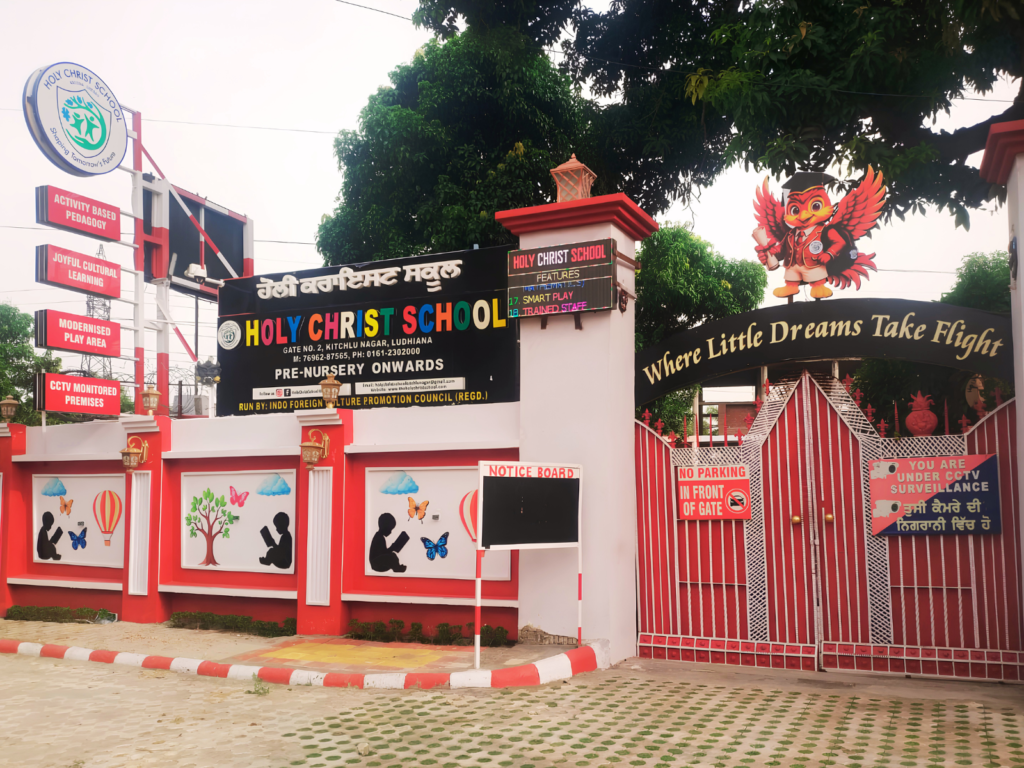
Why Families Near PAU Road Choose Holy Christ School
Parents looking for a nursery school near PAU Road Ludhiana often seek an environment where children are encouraged to grow academically while also developing confidence, creativity, and strong values.
Holy Christ School focuses on creating a positive learning atmosphere through:
- Experienced and caring educators
- Activity-based teaching methods
- Interactive classrooms
- A safe and child-friendly campus
- Opportunities for co-curricular participation
- Strong parent-school communication
- Holistic child development
By combining structured learning with engaging classroom experiences, the school aims to help every child build a strong foundation for future success.
Helping Children Develop a Love for Learning
The ultimate goal of early education is not simply to prepare children for the next grade—it is to inspire a lifelong love of learning.
When children associate school with curiosity, encouragement, and meaningful experiences, they become more motivated to explore new ideas, ask questions, and approach challenges with confidence.
Choosing a nursery school that values both academic growth and personal development can have a lasting positive impact on a child’s educational journey.
FAQ Section
1. What is playway learning, and why is it important for nursery children?
Playway learning is an educational approach that helps children learn through activities, storytelling, games, music, creative projects, and exploration. It supports cognitive, emotional, social, and physical development while making learning enjoyable and age-appropriate.
2. Is playway learning better than traditional learning for nursery students?
For most nursery-aged children, playway learning is highly effective because it encourages curiosity, communication, creativity, and confidence. A balanced approach that combines play-based activities with structured learning can prepare children well for primary education.
3. How do I choose the best nursery school near PAU Road Ludhiana?
Look for experienced teachers, a safe and hygienic campus, activity-based learning, a child-friendly environment, strong parent-school communication, and opportunities for holistic development. Visiting the campus can also help you understand the school’s teaching approach.
4. Why is early childhood education important?
Early childhood education helps children build language skills, confidence, social interaction, creativity, problem-solving abilities, and positive learning habits that support future academic success.
5. Does Holy Christ School use activity-based learning?
Yes. Holy Christ School integrates activity-based learning into its early education program through storytelling, classroom activities, creative projects, music, and interactive teaching methods designed for young learners.
6. What should parents ask during a school visit?
Parents can ask about teaching methods, teacher qualifications, student-teacher ratio, safety measures, extracurricular activities, communication with parents, and the overall learning environment.
7. Why is communication between parents and teachers important?
Regular communication helps parents stay informed about their child’s progress, strengthens the partnership between home and school, and ensures consistent support for the child’s overall development.
8. How can I learn more about admissions at Holy Christ School?
Parents can explore the school’s official website, contact the admissions team, or schedule a campus visit to understand the admission process and educational programs.
Admissions
About Us
https://holychristschool.in/about-us/
Academics
Facilities
Gallery
https://holychristschool.in/gallery/
Contact
https://holychristschool.in/contact/
- National Education Policy (NEP): https://www.education.gov.in/
- NCERT: https://ncert.nic.in/
Looking for the Right Nursery School Near PAU Road Ludhiana?
Choosing a nursery school is one of the most important decisions in your child’s educational journey. A supportive environment, experienced teachers, activity-based learning, and strong values can help children develop confidence and a lifelong love for learning.
At Holy Christ School, we are committed to providing a nurturing environment where every child can learn, explore, and grow. We invite parents to visit our campus, meet our educators, and experience our approach to early childhood education.